
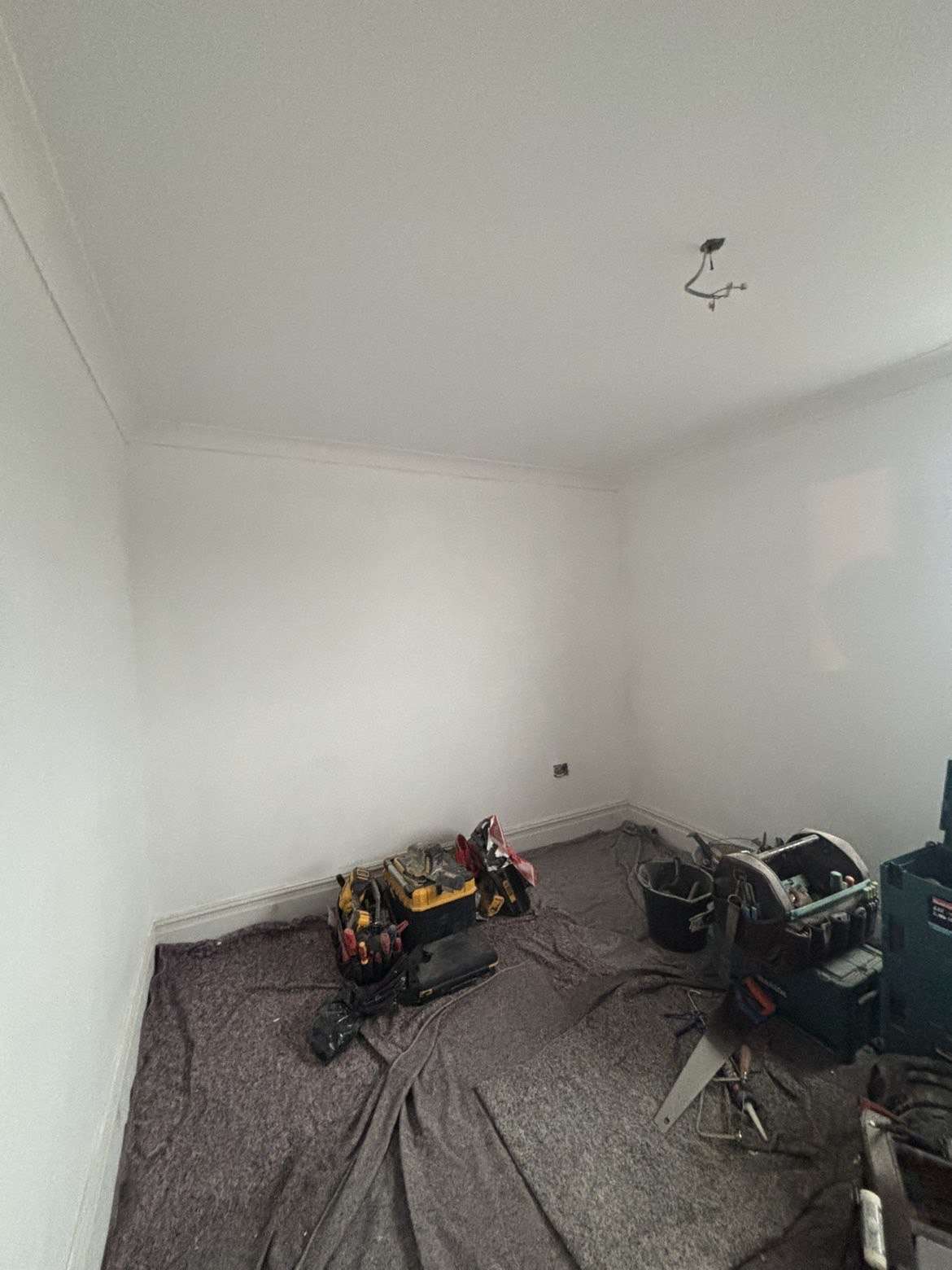
House renovation order of works: what happens first, and why
Doing renovation work in the right order saves money, because each stage protects the one before it instead of undoing it.
Most renovation budgets that go wrong do so because of sequence, not specification. A new kitchen fitted before the rewire, fresh plaster cut open for a pipe run, or decorated rooms that have to be redone after the roof leaks: each is a stage carried out before the work it depended on.
The house renovation order of works below is the general sequence most builders follow. Every house is different, and some stages overlap or repeat, but the logic stays the same: understand the building, make it sound and dry, run the hidden services, close the walls, then fit and finish.
Need this sorted?
Renovations & Refurbishments from ADB SW.
1. Survey, plan and approvals
Start by understanding what you have bought or are living in. A condition survey, plus opening up a few areas where problems are suspected, tells you whether there is damp, rot, structural movement or outdated wiring that will change the scope. Agree the layout you want before anything is removed, because moving a kitchen or bathroom changes drainage, plumbing and electrical routes.
This is also the time to check whether planning permission, listed building consent or Building Regulations approval is needed, and whether a structural engineer has to design any openings. Approvals take time, and waiting for them is far cheaper than stopping halfway through.
2. Strip-out and structural work
Once the plan is fixed, remove what is being replaced: old kitchens, bathrooms, damaged plaster, redundant pipework and any walls coming out. Strip-out reveals the real condition of floors, joists and walls, so allow a pause to review what has been found before committing to the next stage.
Structural work comes next. New openings, steel beams, repairs to joists, underpinning or chimney breast removal all happen before anything decorative, because they create dust, vibration and sometimes small amounts of movement that would crack new finishes.
Renovations & Refurbishments
- Full re-plastering & decoration
- Property remodelling & interior alterations
- The right trades in the right order
3. Make the building weathertight
Roof repairs, chimney work, gutters, external render, repointing and new windows should be dealt with early. Water getting into the building damages everything that follows, and damp walls need time to dry out before they are plastered. Where damp is present, the cause should be fixed now rather than covered later.
4. First fix services and carpentry
First fix is everything that goes inside walls, floors and ceilings before they are closed: cables, back boxes, pipework, waste runs, heating circuits, ventilation ducts and any data cabling. Carpentry first fix includes stud walls, door linings, floor repairs and noggins for heavy items such as wall cupboards or radiators.
Decide where sockets, lights, radiators and appliances will go before this stage. Changing your mind after plastering is one of the most common and avoidable renovation costs.
5. Insulation, plastering and screeds
With services in place, insulation goes into walls, floors and lofts, followed by plasterboard, plastering or lime plaster as the building requires. Floor screeds are laid at a similar point. Both need drying time, and rushing decoration onto damp plaster or screed causes problems with paint and flooring later.
6. Second fix, kitchens and bathrooms
Second fix connects and completes what first fix prepared: sockets and switches, light fittings, radiators, sanitaryware, kitchen units, worktops, internal doors, skirting and architraves. Tiling usually happens here too. Kitchens and bathrooms are installed now, because their finishes would be damaged by the earlier, messier stages.
7. Decoration, flooring and snagging
Decoration comes near the end, followed by final floor coverings so they are not damaged by ladders, paint and trades. The last step is snagging: walking through the house to list small defects and putting them right before handover. Certificates for electrical work, gas and Building Regulations sign-off should be collected at this point.
Common questions
Where do you start with a house renovation (order of works)?
Start with a survey and a fixed plan, then approvals, strip-out and structural work. Make the building weathertight, run first fix services, plaster, then complete second fix, kitchens, bathrooms, decoration and flooring.
Should the kitchen or the flooring go in first?
Usually the kitchen goes in before the final floor finish in the rest of the room, although some floors are laid under the units. Agree this with your kitchen fitter and flooring supplier early.
Can I live in the house during a renovation?
Often during a partial renovation, but full strip-outs with rewiring and replastering are very disruptive. Phasing the work room by room can help in some homes.
Should I rewire before plastering?
Yes. Rewiring, plumbing and heating pipework are part of first fix and should be completed before walls and ceilings are plastered.
Want a professional to handle it?
Tell us about the job and we’ll come back with a clear next step.
Serving Paignton, Torbay & South Devon. Mon–Fri 08:00–17:00.
Related services
Covering Torbay and the South Hams
- Planning permissionWhen planning permission applies, when it does not, and how Torbay, Teignbridge and South Hams differ.
- Building regulationsHow Building Regulations approval works, what inspections happen and how it differs from planning permission.
- Party wall agreementsHow the Party Wall Act works, when notice is needed and why a schedule of condition protects everyone.
- Choosing a builderHow to vet a builder properly, compare quotes fairly, and judge communication before work begins.