
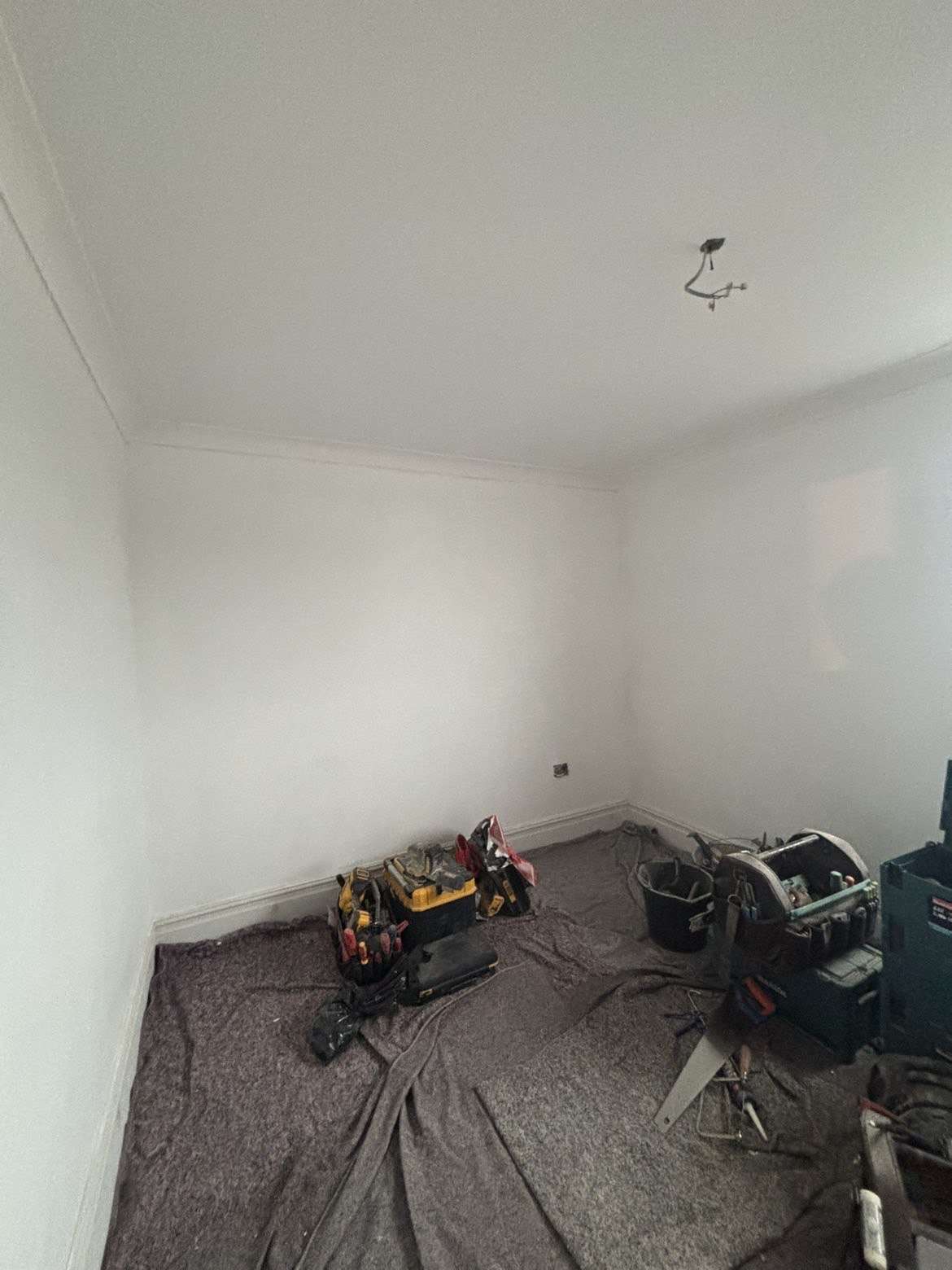
Blown and hollow plaster: why it happens and how it is fixed
A hollow sound when you tap a wall usually means the plaster has already separated from the surface behind it, and skimming over it will not solve anything.
Blown plaster is one of the most common repairs we carry out across Torbay and South Devon, and it is also one of the most misunderstood, because the wall can still look fine on the surface while the plaster underneath has already lost its bond to the wall behind it. By the time cracking, bulging or crumbling becomes visible, the failure has usually been developing for months or years.
The term “blown” simply means the plaster has separated from its background, whether that is brick, block, stone or an earlier plaster coat, and is now held on by little more than the paint film and a weak edge bond. Tap it and you get a distinctly hollow, drum-like sound instead of the solid knock of sound plaster.
Understanding why plaster blows in the first place matters because a like-for-like patch over a hollow area, without dealing with the cause, tends to fail again within a year or two. This guide covers the common causes, how to test for it, and what a proper repair looks like.
Need this sorted?
Renovations & Refurbishments from ADB SW.
What is blown plaster?
Blown plaster has lost its bond, or key, with the wall behind it, so it sounds hollow when tapped and may bulge or crack. The causes section below explains why that bond fails and why the underlying problem needs identifying before replastering.
What causes plaster to blow
Moisture is by far the biggest cause, whether from rising damp, penetrating damp, condensation or a leak, because water breaks down the bond between plaster and its background over time, particularly with older lime-based plasters and with gypsum plaster applied directly onto a damp masonry surface.
Salt contamination is closely related and often overlooked. Salts drawn into a wall from groundwater, coastal air or old chimney flue deposits are hygroscopic, meaning they continue to draw moisture from the air long after the original wet source has been dealt with, and this ongoing cycle of expansion and contraction gradually breaks the bond between plaster and wall.
- Moisture breaking down the bond between plaster and background
- Salt contamination continuing to draw moisture long after a repair
- Incompatible plaster applied over an unsuitable background
- Age and natural deterioration of very old lime plaster
Renovations & Refurbishments
- Full re-plastering & decoration
- Property remodelling & interior alterations
- The right trades in the right order
Other common causes worth ruling out
Incompatible materials cause plenty of blown plaster too. Modern gypsum plaster applied directly onto old lime plaster, or onto a wall that has not been correctly prepared, often fails to bond properly and blows within a few years even without any moisture involved at all. The same applies when plaster is applied over painted or wallpapered surfaces without proper preparation.
Structural movement, even minor settlement or seasonal expansion and contraction, can also crack the bond behind plaster over time, particularly around door and window openings where movement tends to concentrate. And simply poor original workmanship, thin coats applied too quickly or over a dusty, unprimed background, shortens the life of plaster considerably.
How to test for blown plaster yourself
The simplest test is to tap the wall firmly with a knuckle across a grid pattern, listening for a hollow, drum-like sound compared with the solid knock of sound plaster nearby. Areas around damp patches, below window sills, and near skirting boards are the most common places to find blown sections, so start there.
Visual clues include hairline cracking in a crazed or map-like pattern, slight bulging that catches the light at an angle, and paint that has a soft, slightly springy feel when pressed gently. None of these guarantee blown plaster on their own, but combined with a hollow sound they are a strong indicator that a hack-off is needed rather than a simple filler repair.
- Tap systematically across the wall listening for a hollow sound
- Check around damp patches, sills and skirting first
- Look for hairline crazing or slight bulging in raking light
- Press gently for a soft, springy feel under painted areas
Why a filler patch is not a fix
Filling a crack or skimming a thin coat over a blown area treats the symptom, not the cause, and because the plaster underneath is already detached, the new surface has nothing solid to key into. It typically cracks again within months, often in a slightly different pattern, and the underlying cause, whether damp or incompatible materials, is left completely unaddressed.
A proper repair removes the affected plaster back to a sound edge, addresses whatever caused the failure in the first place, and applies a plaster suited to the background and moisture conditions of that specific wall, which is a very different job to a quick surface patch.
What a proper hack-off and replaster involves
The affected area is removed back to sound plaster or bare masonry, taking care to identify and address the underlying cause before any new material goes on, whether that means fixing a damp source, allowing the wall to dry, or simply choosing a more suitable plaster system for the background.
On solid or historic walls, a breathable lime-based plaster is often the right choice rather than standard gypsum, particularly where damp or salt contamination has been part of the cause, since gypsum applied over residual salts tends to blow again within a short period regardless of how well it is applied.
Getting the repair right first time
Because blown plaster so often points to an underlying moisture or compatibility issue, it is worth having it properly assessed rather than just asking for a patch repair on the affected area, which can leave the same fault developing again just out of sight.
If you have got hollow-sounding or cracking plaster anywhere in your home, get in touch for a free quote and we will identify the cause before recommending the right repair, not just the quickest one.
Common questions
What is blown plaster?
Blown plaster is plaster that has come away from the masonry behind it. The surface may still look sound, but it sounds hollow when tapped and often bulges, cracks or crumbles when pressed.
What causes blown plaster?
Moisture is the biggest cause (rising or penetrating damp, condensation or a leak), followed by salt contamination, modern plaster applied over an unsuitable background, the age of very old lime plaster, and structural movement. Finding the cause matters before replastering, or the new plaster can blow again.
Can blown plaster be repaired without removing it?
In most cases no, because the plaster has already lost its bond to the background and nothing applied on top will restore that. There are specialist injection resins used in some situations, but for most domestic blown plaster a proper hack-off and replaster gives a far more reliable, lasting result.
Will new plaster blow again if I don't fix the cause?
Very likely, especially where the cause was damp or salt contamination. Reapplying the same plaster type over an unresolved moisture source or salt-laden wall typically fails again within a year or two, which is why identifying the cause matters as much as the repair itself.
How do I know if I need lime plaster instead of gypsum?
As a general rule, solid stone or brick walls built before the 1920s, or any wall that has had damp or salt problems, are better suited to a breathable lime-based plaster. Modern cavity walls in good condition are usually fine with standard gypsum plaster.
How long does a hack-off and replaster take?
This depends on the size of the affected area and whether the wall needs time to dry before replastering. A single wall can often be completed within a couple of days, but if damp has to be resolved first the wall may need several weeks to dry out before the new plaster goes on.
Will blown plaster fall off?
It can. Once plaster has lost its bond, sections may crack, bulge and eventually come away, particularly on ceilings or where damp continues. Ceilings that sag should be looked at promptly.
What does blown plaster sound like and look like?
It sounds hollow or drum-like when tapped, compared with a solid knock on sound plaster. It may look perfectly normal, or show fine cracks, slight bulges or bubbling paint.
What does blown plaster mean?
It means the plaster has separated from the wall behind it. The term describes the loss of bond, not a particular cause, which is why the cause still needs identifying.
Want a professional to handle it?
Tell us about the job and we’ll come back with a clear next step.
Serving Paignton, Torbay & South Devon. Mon–Fri 08:00–17:00.
Related services
Covering Torbay and the South Hams
- Damp in solid wallsHow to diagnose damp correctly in a solid wall before spending on treatment.
- Cracked render repairHow to read a render crack correctly before deciding on a patch or full repair.
- Flat roof leaksHow to trace a flat roof leak to its real cause before patching or recovering.
- Sagging floor joistsHow to tell a stable old floor from active joist decay before repairing.