
Plasterboard vs plaster on ceilings: what's different overhead
Ceilings carry their own weight downward against gravity, which changes the calculation compared with choosing a wall finish.
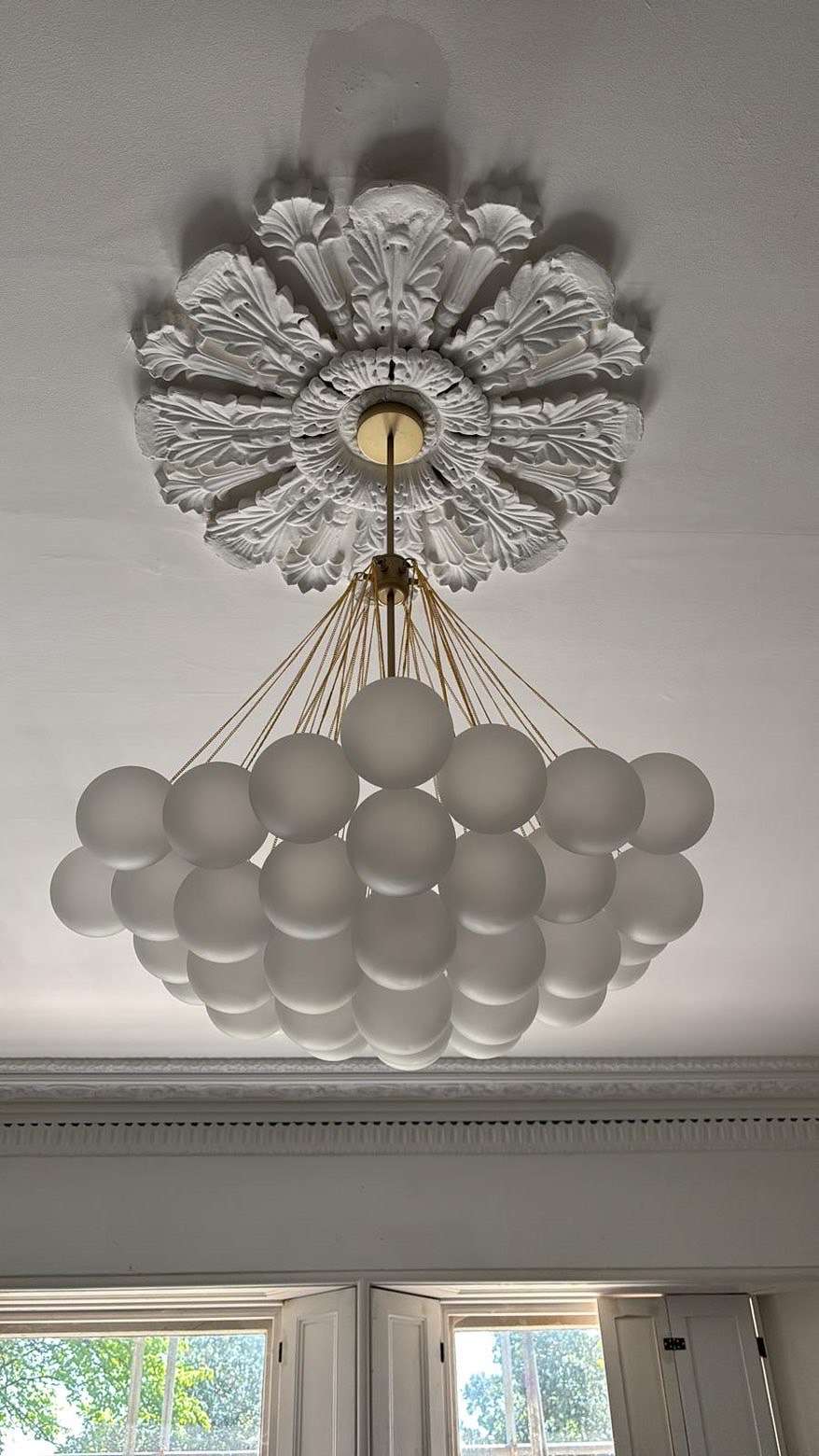
Ceiling finishes get less attention than wall finishes in most renovation conversations, but the decision between plasterboard and traditional wet plaster overhead carries its own specific considerations that don't apply in quite the same way to walls. A ceiling has to resist gravity constantly, hide services running above it, and in many older Devon properties, work around features like ceiling roses, cornicing and lath-and-plaster construction that's over a century old.
New ceilings, whether in an extension, after a loft conversion, or during a full renovation, are almost always plasterboard, screwed or nailed to joists and finished with a skim coat, because it's the practical modern standard and there's rarely a case for anything else on new construction. The real decision comes up on existing older ceilings: do you keep and repair original lath and plaster, or strip it out and replace with plasterboard?
This guide looks at how ceilings differ from walls in this decision, what's involved in keeping original lath and plaster, and when plasterboard is genuinely the better route even on a period property.
Need this sorted?
Renovations & Refurbishments from ADB SW.
What type of plaster is used on a ceiling?
Most modern ceilings are plasterboard fixed to the joists, finished with a thin gypsum skim coat. Older ceilings, typically before the 1930s, are lime plaster on timber laths. Repairing a lath-and-plaster ceiling usually calls for lime; overboarding or replacing it means plasterboard and a gypsum finish.
So the right plaster for your ceiling depends on what is there already and whether you are repairing or renewing it — which is what the rest of this guide covers.
Why gravity changes the calculation overhead
A wall finish only has to resist its own weight sideways, held in place against a vertical surface, whereas a ceiling finish has to resist gravity pulling it straight down, constantly, for the life of the building. This is why ceiling failures, whether in old lath and plaster or in modern plasterboard, tend to be more dramatic and more urgent than wall failures, often involving sections coming away entirely rather than just cracking or blowing.
Original lath and plaster ceilings were built with a key, plaster pushed through gaps between thin wooden laths and curling over on the other side to lock the whole ceiling in place. Over a century or more, these keys can break due to vibration, movement, water damage from above, or simply age, and a ceiling that looks fine from below can be dangerously close to letting go in sections. This is a genuinely different risk profile from a wall in the same condition.
Plasterboard ceilings are mechanically fixed with screws or nails directly into the joists, which is a more reliable long-term fixing than the plaster key relied on by lath and plaster, and it's part of why plasterboard has become the standard for new ceiling construction.
Renovations & Refurbishments
- Full re-plastering & decoration
- Property remodelling & interior alterations
- The right trades in the right order
Assessing an existing lath and plaster ceiling
Before deciding whether to repair or replace an old ceiling, it needs a proper assessment from below and, where access allows, from above in the loft or room over. Sagging, visible cracking along lath lines, and any bounce or give when walked on above are signs the key has failed in places and the ceiling is at risk of coming down, sometimes with very little warning.
Water staining on an old ceiling is a particular red flag, since water weakens the plaster key directly and often means there's an active or historic leak above that needs addressing regardless of what happens to the ceiling finish. A stained but apparently solid-feeling ceiling can still be significantly weaker than it looks.
Where a lath and plaster ceiling is largely sound with only localised failure, patch repair using matching lath and plaster or a suitable modern repair system can preserve original features like cornicing and ceiling roses that are difficult and costly to replicate. Where failure is widespread, full replacement is usually the safer and more cost-effective option, since patching a ceiling that's failing throughout just delays a bigger, more disruptive repair.
- Sagging or visible bounce from above indicates a failing plaster key
- Water staining weakens the key and points to a leak needing attention
- Localised failure can often be patch-repaired to preserve original features
- Widespread failure usually calls for full replacement rather than patching
Preserving original features like cornicing and roses
One of the strongest reasons to repair rather than replace an original ceiling in a period property is to preserve decorative plasterwork like cornicing, ceiling roses and coving that would be expensive or impossible to match exactly with modern reproduction pieces. These features are often specific to the age and style of the property and contribute significantly to a room's character.
Where a ceiling has to come out entirely, original decorative elements can sometimes be carefully removed, cast, and reinstated, or replaced with close reproduction pieces, but this adds cost and needs planning before demolition starts, not decided on the fly once the ceiling is already down. If your ceiling has original features you want to keep, flag this clearly before any repair or replacement work begins.
- Original cornicing and roses are often specific to the property's age
- Removal and reinstatement of features is possible but must be planned ahead
- Reproduction pieces can be sourced but rarely match exactly
- Decide on feature preservation before any ceiling work starts, not during
When plasterboard is the right call even on an older ceiling
Where a lath and plaster ceiling has failed extensively, has been previously damaged by water, or the property has no significant decorative features worth preserving in that particular room, plasterboard is usually the more practical and cost-effective choice. It also allows for improved insulation and, where relevant, fire and sound performance to be built in above the new ceiling during the work, which is harder to achieve with a lath and plaster repair.
Plasterboard ceilings are also generally easier to access later for electrical or plumbing work run above, and any future repair is more straightforward since it's a standard, widely understood construction method rather than a specialist lath and plaster repair.
Deciding what's right for your ceiling
If you have an older ceiling and you're not sure whether it's sound, worth repairing, or needs full replacement, get it properly assessed before any redecoration or other work goes ahead nearby, since a failing ceiling is a safety issue as well as a cost one. If there's original decorative plasterwork you want to keep, say so clearly at the outset so it can be planned into the job properly.
We assess ceilings on a case-by-case basis, being honest about what can be preserved and what genuinely needs replacing, and we're happy to have a look at yours and give you a free, no-obligation quote for the right approach.
Common questions
What type of plaster should I use for a ceiling?
For a new or overboarded ceiling, plasterboard with a gypsum skim finish. For repairs to an old lath-and-plaster ceiling, lime plaster is usually the compatible choice.
How do I know if my lath and plaster ceiling is dangerous?
Visible sagging, cracking along lath lines, bounce when walked on from above, or water staining are all warning signs that need a proper assessment. Left unaddressed, a failing lath and plaster ceiling can come down without much warning.
Can original ceiling roses be saved if the rest of the ceiling is replaced?
Often yes, they can be carefully removed and reinstated, or cast and reproduced, but this needs planning before the ceiling comes down rather than being decided once demolition is already underway.
Is plasterboard on ceilings noisier than lath and plaster?
Sound performance depends more on the overall floor and ceiling build-up, including any insulation, than on the plaster finish alone, though additional insulation is often easier to incorporate when a ceiling is being replaced with plasterboard.
Why did my ceiling develop a bulge before it came down?
This typically indicates the plaster key on a lath and plaster ceiling had failed in that area, often due to age, vibration or water damage, and the ceiling was only being held by remaining sound sections around it before those also gave way.
Want a professional to handle it?
Tell us about the job and we’ll come back with a clear next step.
Serving Paignton, Torbay & South Devon. Mon–Fri 08:00–17:00.
Related services
Covering Torbay and the South Hams
- Skimming vs replasteringHow to tell whether a tired wall just needs a fresh skim or a full strip-back replaster.
- Silicone vs monocouche renderHow silicone and monocouche render actually differ in build-up, weather performance and cost.
- Extension vs loftGround-floor extension or loft conversion: which actually solves your space problem.
- Garage vs extensionWhether to convert your existing garage or build a new extension instead.