
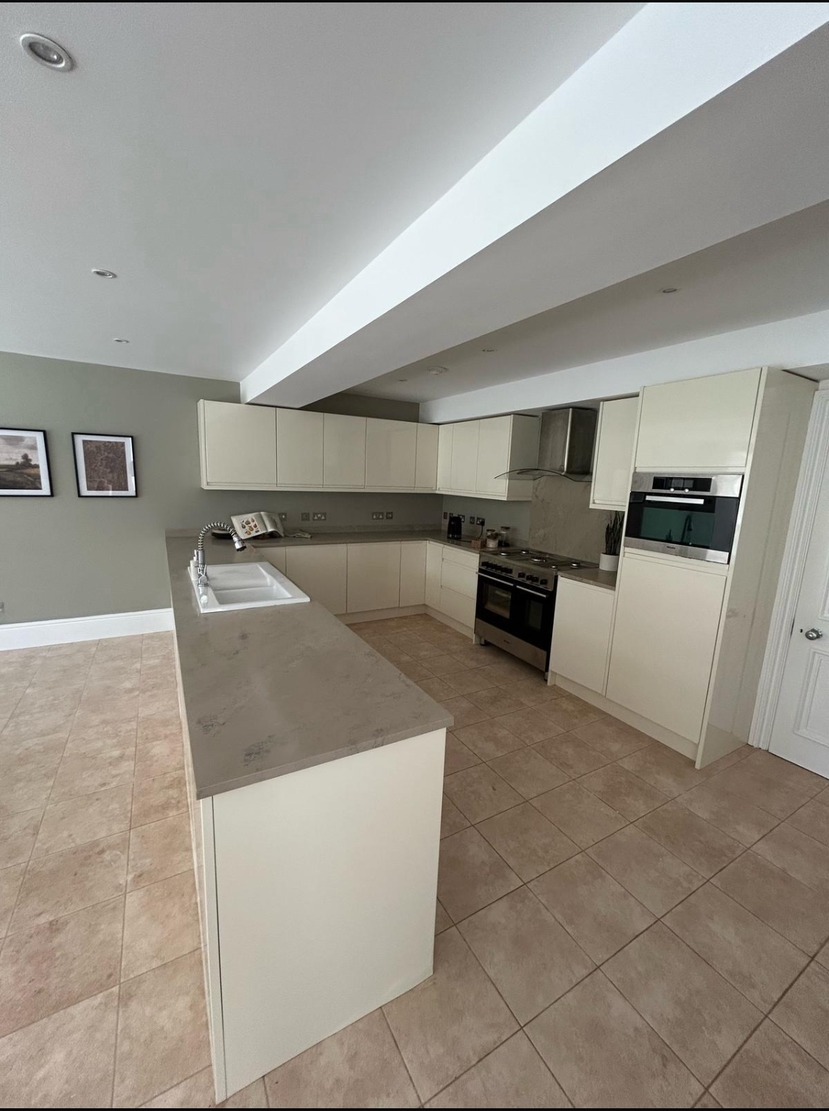
Refurbishing a property that has to work for guests, not just you
Holiday lets take heavier wear than a family home and need to be refurbished with turnaround and durability in mind.
Torbay and the South Hams have a large stock of holiday lets, from converted seafront flats to standalone cottages let out through the summer season. Refurbishing one is a different job to refurbishing a home you live in yourself, because the finishes need to survive frequent changeovers, varied use and long periods where nobody is checking on small problems day to day.
Guests are hard on a property in ways owners often underestimate: doors get left open in the wind, showers run longer than usual, and furniture gets moved around. A refurbishment that looks right on day one but cannot cope with that pattern of use will need repeat repairs that eat into the letting income it is meant to protect.
Timing matters too. Most owners want work scheduled around the shoulder season, so the property is ready before Easter or the summer peak, which means booking trades well ahead and having a clear list of priorities if the whole job cannot be finished in one window.
Durability over decoration
Flooring, kitchen worktops and bathroom fittings all take more wear in a holiday let than in an owner-occupied home, so it is worth specifying hard-wearing materials even where they cost a little more upfront.
Hinges, door closers and window fittings also see more use than in a typical home, and cheap ironmongery tends to fail within a season or two of regular guest turnover.
What guests actually notice
Working heating and hot water, a shower that performs well, and a kitchen that is easy to clean matter far more to guest reviews than expensive finishes that do not affect day-to-day use.
Storage for luggage, clear labelling of switches and stopcocks, and simple, robust window and door furniture reduce the number of call-outs owners get during a let, which is often the real cost of a poorly planned refurbishment.
- Reliable heating and hot water with simple, guest-proof controls
- Hard-wearing kitchen worktops and flooring that clean easily
- Robust ironmongery on doors and windows to handle frequent use
- Clear labelling for stopcocks, fuse boards and heating controls
Scheduling around the letting calendar
Work booked for the shoulder months, typically autumn through to early spring, avoids disrupting the peak letting season and gives more flexibility if the job overruns slightly.
Where a full refurbishment cannot be completed in one closed period, prioritising the kitchen, bathroom and heating system first tends to give the best return, since these are what most affect guest satisfaction and repeat bookings.
Compliance and practical constraints
Holiday lets have specific fire safety and electrical testing expectations that go beyond a standard owner-occupied home, so it is worth factoring these checks into the refurbishment programme rather than treating them separately afterwards.
Access for trades can be tighter than expected in converted seafront buildings with shared stairwells or limited parking, which needs planning into the schedule from the outset.
Common questions
When is the best time to refurbish a holiday let?
The shoulder season, typically autumn through early spring, gives the most flexibility without cutting into peak bookings, and allows a little more room in the schedule if work overruns.
Should I prioritise the kitchen or bathroom first?
Both have a big effect on guest satisfaction, but if you can only refurbish one, most owners find the bathroom has the biggest impact on reviews, since a tired or poorly performing shower is one of the most common guest complaints.
Are there extra safety requirements for holiday lets?
Yes, holiday lets typically need more thorough fire safety provisions and regular electrical testing than an owner-occupied home, and it is worth checking current requirements before finalising the refurbishment scope.
Is it worth spending more on durable finishes?
Generally yes, since finishes that fail after a season or two of guest turnover cost more in repeat repairs than choosing a slightly more expensive, harder-wearing option at the outset.
Tell us about the job and we’ll come back with a clear next step.
Serving Paignton, Torbay & South Devon. Mon–Fri 08:00–17:00.
- Victorian terracesWhat to check and in what order when renovating a solid-wall Victorian terrace.
- 1930s semisHow to sequence structural, insulation and layout upgrades on a typical 1930s semi.
- Coastal bungalowsWhy coastal exposure changes material choices and maintenance schedules for bungalows.
- Landlord maintenanceA maintenance rhythm for landlords that catches problems before tenants report them.