Flat roof replacement and repairs in South Devon
A flat roof replacement should address the whole roof build-up, not just exchange the visible covering. The deck, insulation, edges and drainage all influence how the finished roof works. ADB SW welcomes enquiries about flat roofing as part of general building work across South Devon. Share photographs, the type of room below and any leak history so we can discuss the existing condition and proposed scope.
Establish whether repair or replacement makes sense
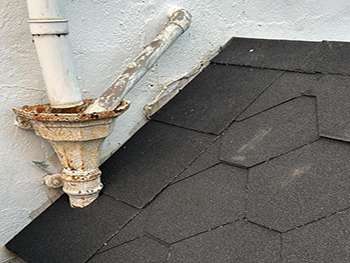
A local defect at an outlet, edge or roof junction may be repairable when the surrounding covering and structure remain sound. Repeated leaks, widespread deterioration or moisture within the roof build-up can point towards more extensive work. A stain on the ceiling does not identify the entry point reliably, because water can travel before appearing indoors. Assessment should consider the roof above and the affected room below.
The deck and supporting timbers need attention where there are signs of softness, sagging or prolonged wetting. Covering over a failing background can leave the main problem unresolved. Opening up may be needed to establish the extent of deterioration, so agree how concealed damage will be handled. Any proposal to retain existing layers should be based on their condition and compatibility with the new roof design.
Compare coverings as complete systems
Felt roofing uses bituminous layers to form the waterproof covering. EPDM is a rubber membrane, while GRP forms a glass-reinforced resin finish. These are broad material categories rather than interchangeable specifications. Each requires a suitable background, compatible details and appropriate installation conditions. The roof shape, penetrations, access and junctions help determine which approach is practical for the particular building and proposed work.
Compare quotations for the complete build-up rather than selecting a material name alone. Ask what deck preparation, insulation, edge trims, upstands and outlet details are included. Connections to walls, rooflights and neighbouring roofs need careful coordination. No covering can compensate for poorly arranged drainage or unsuitable support, and a tidy central surface tells only part of the story when the vulnerable details are around its edges.
Plan insulation and moisture control together
A warm roof generally places insulation above the structural deck, keeping that deck within the insulated envelope. A cold roof generally places insulation below the deck and needs a suitable ventilation strategy above it. The right arrangement depends on the existing construction and proposed design. Changing from one approach to another can affect finished levels, thresholds, upstands and how the roof meets surrounding walls.
Insulation, air leakage and vapour control need consideration together to manage condensation risk. Adding insulation without reviewing the build-up can create new moisture problems. Replacement work may also trigger Building Regulations requirements, including thermal performance. Agree the design information and building control route where needed, and check that the specified layers form a coherent roof rather than a mixture of details from different approaches.
Resolve falls, drainage and the work sequence
Flat roofs still need designed falls to move water towards suitable outlets or gutters. Persistent ponding calls for assessment of levels, deck condition and drainage rather than an assumption that a new membrane will solve it. Outlet capacity, overflow arrangements and access for clearing debris should be considered. Altering insulation thickness or roof levels can change these relationships and needs to be reflected in the details.
Discuss safe access, scaffolding where required, waste removal and protection of the occupied rooms below. Rooflights, external pipework and other services may affect the sequence. Send the property location, approximate roof layout, access photographs and details of previous repairs with your enquiry. The written scope should distinguish covering replacement from deck or structural repairs and identify insulation, drainage and making good so the proposed work is clear.
Common questions
How much does a flat roof cost?
Cost depends on area, access, covering, deck condition, insulation and the complexity of edges, outlets and rooflights. Removing existing layers and repairing concealed damage can change the scope. Compare quotations that describe the same roof build-up, drainage details and associated work rather than the covering alone.
Does a leaking flat roof always need replacing?
No. An isolated defect may be suitable for repair if the surrounding roof is sound. Recurring leaks, trapped moisture or deterioration across several areas can make replacement more appropriate. The cause and condition need assessment before choosing either route.
Is a warm roof always the right choice?
A warm roof can be appropriate for many replacements, but the existing structure, available height and adjoining details matter. The insulation arrangement and moisture strategy should be designed for the building rather than selected by label alone.
Tell us about your project
Send the property details and the work you have in mind so the scope can be discussed before a quote is agreed.