Building defect diagnosis in Devon.
Before anyone quotes a repair, somebody has to work out what is actually wrong. That is a different skill from fixing it — and getting it wrong is expensive.
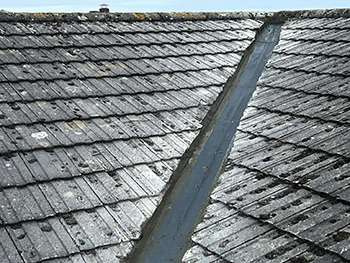
Most failed repairs are not bad workmanship. They are good workmanship applied to the wrong problem. A wall gets tanked when the real issue was a bridged cavity; a roof gets patched when the water was coming in at a flashing six feet away.
Defect diagnosis means treating the building as evidence. Where does the damp appear, and when? Does it follow rain or follow temperature? Is the crack tapered or parallel? Is it moving? We look at the pattern before we look at the price.
Damp: three completely different problems with one symptom
Rising damp, penetrating damp and condensation all present as a wet wall, and all three have different causes and different fixes. Treating one as another is the most common expensive mistake in domestic property.
Penetrating damp follows the weather — it appears after driving rain and usually on an exposed elevation. Condensation follows temperature and ventilation, appears in cold corners and behind furniture, and gets worse in winter with the windows shut. Genuine rising damp is far rarer than the number of injected damp courses in Britain suggests.
- Timing and pattern recorded before any conclusion
- External elevations, pointing and render checked first
- Ground levels, air bricks and bridged cavities inspected
- Ventilation and heating pattern discussed with you
Cracking: what matters is shape, direction and movement
Almost every house has cracks. The useful questions are where it is, what shape it is, whether it passes through masonry or follows the mortar, and whether it is getting wider.
Fine hairline cracking at plaster joints and around openings is usually shrinkage or thermal movement. Tapered, stepped, diagonal cracking through brickwork that widens towards the top or bottom is a different conversation, and one where structural engineering input is the right next step rather than filler.
Timber decay and structural failure
Rot needs moisture. Find the moisture source and you have usually found the reason a lintel, joist end, wall plate or window frame has failed. Replacing the timber without fixing the water simply resets the clock.
In older South Devon properties we frequently find joist ends built into damp external walls, bearing failure at wall plates, and previous alterations that removed support without replacing it. These are the defects worth catching early.
What you get from us — and where we hand over
You get a builder's assessment: what we can see, what the likely cause is, what we would do about it, and what it would take. Where the evidence points to structural movement, subsidence or anything requiring calculation, we say so and recommend a structural engineer or the appropriate specialist.
We do not diagnose a defect and then insist we are the only ones who can fix it. If the honest answer is that you need a different specialism, that is the answer you get.
Common questions
Is a crack in my wall serious?
Most are not. Shape, direction and whether it is still moving matter far more than width alone. Stepped diagonal cracking through brickwork warrants a closer look than hairline cracking at a plaster joint.
Can you tell the difference between damp and condensation?
Usually, yes — the two behave differently. Penetrating damp follows rainfall and exposure; condensation follows temperature, ventilation and where cold surfaces are.
Do I need a structural engineer?
For anything involving genuine movement, load or beam sizing, yes. We will tell you when that is the right call rather than guessing.
Do you charge to look at a defect?
Get in touch and explain the issue. We will be straight with you about whether it is something we can assess on a normal visit or something that needs a more involved investigation.
Tell us about the job and we’ll come back with a clear next step.
Serving Paignton, Torbay & South Devon. Mon–Fri 08:00–17:00.