
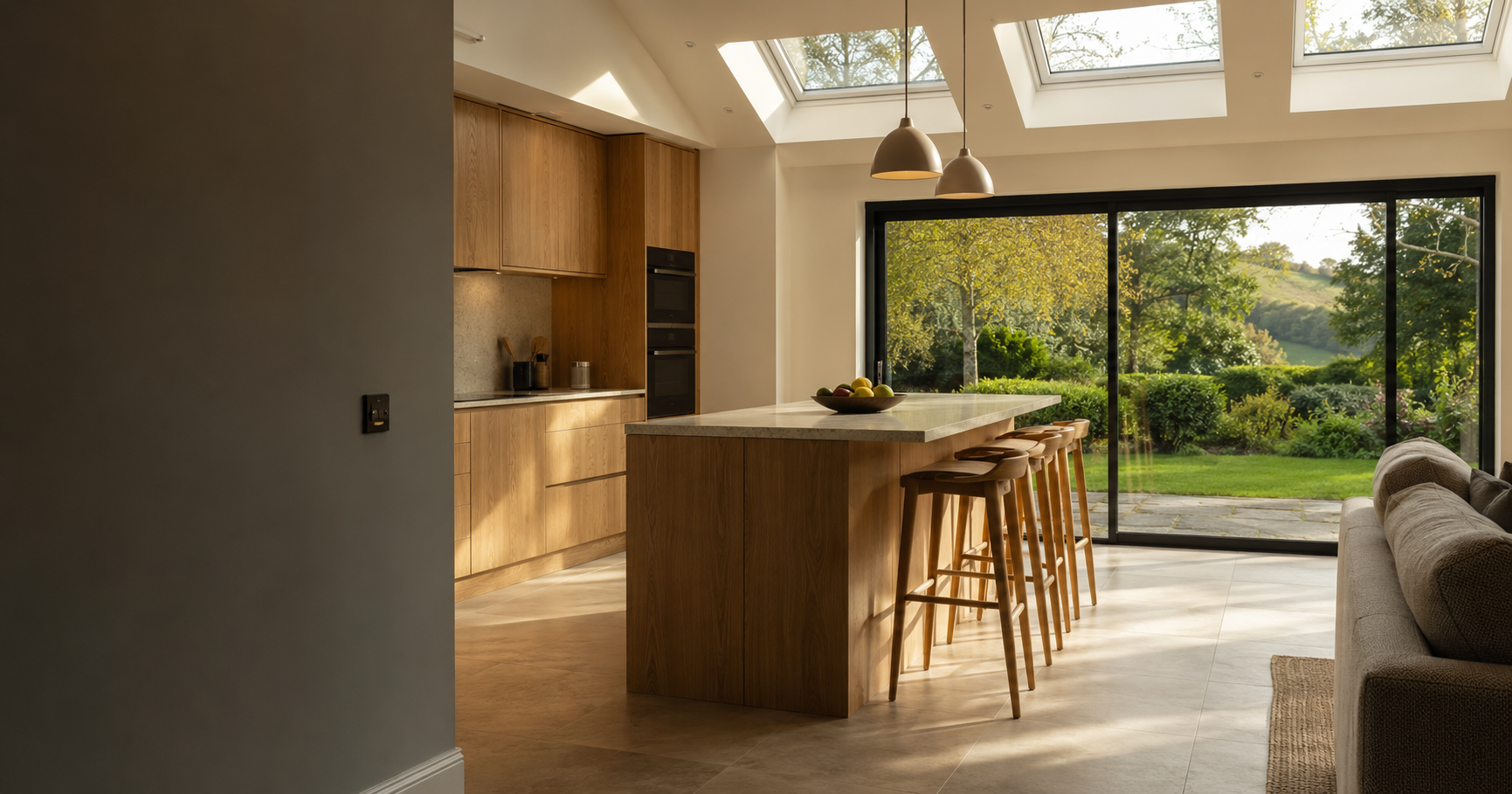
Building refurbishment across South Devon.
Bringing a whole property back — structure, fabric, services and finishes — rather than decorating over problems that will come back through.
Refurbishment is the word people reach for when a property needs more than decoration and less than demolition. In practice it means working out which parts of a building are worth keeping and which have quietly reached the end of their life.
South Devon has a lot of older housing stock, a lot of it altered several times, and a lot of those alterations done in eras with very different standards. Refurbishing that kind of property well is mostly about sequence and discovery.
Start with the fabric, finish with the finishes
The order matters more than anything else. Roof, structure and weathertightness first; then services; then insulation and plaster; then the parts you actually see. Reverse that and you will be taking new plaster off to chase a cable.
It is also the order that protects your money. Spending on kitchens and bathrooms before the building envelope is sound is how people end up doing the same room twice.
- Roof, rainwater and external envelope made sound
- Structural alterations and repairs completed
- First fix services routed before anything is closed up
- Insulation, plaster and screeds
- Second fix, joinery and decoration
Expect discovery in an older property
Nobody can see inside a wall from the outside. In refurbishment, opening up reliably reveals things the survey could not: previous alterations without support, buried timber, redundant services, and the accumulated ingenuity of forty years of DIY.
The professional response is not to pretend it will not happen. It is to plan for it — keeping a contingency, opening up early where possible, and telling you the moment something is found rather than at invoicing.
Layout changes and how far to go
Refurbishment is the natural moment to fix a layout, because the disruption is already happening. Removing a wall between two small rooms, relocating a bathroom, opening up a kitchen to the rear of the house — these are far cheaper during a refurbishment than as separate projects later.
Equally, a refurbishment does not have to become an extension. We will be straight with you about where the additional spend genuinely buys you a better house and where it does not.
Living in it, or moving out
Whole-house refurbishment while living in the property is possible and frequently the right financial decision. It is also harder, slower, and requires the work to be phased into zones with sealed boundaries.
An empty property can be worked on far more efficiently. If you have the option, we will tell you honestly what the difference in programme and disruption looks like so you can decide with real information.
Common questions
What is the difference between renovation and refurbishment?
In practice the terms overlap. We use refurbishment for work that takes in the whole property including fabric and services, rather than upgrading individual rooms.
Can I live in the house during a refurbishment?
Often yes, with the work phased into zones and sealed boundaries between the works and the living space. It takes longer than an empty property.
How much contingency should I allow?
Older properties reveal things when opened up. Allowing a genuine contingency rather than budgeting to the last pound is the single best piece of planning advice for refurbishment.
Do you handle the whole project or just the building work?
Projects are managed by Anthony throughout, coordinating our trades and established local specialists so you have one point of contact.
Tell us about the job and we’ll come back with a clear next step.
Serving Paignton, Torbay & South Devon. Mon–Fri 08:00–17:00.