Extending a coastal home on the South Devon shoreline
A rear extension in a sheltered inland village and one on an exposed Brixham or Dawlish frontage are different jobs with the same drawing.
Salt-laden air attacks fixings and ironmongery. Wind loading changes glazing and roof specification. Winter weather dictates when the roof can safely come off.
If your property looks at the sea, these are the things that decide whether the extension still looks good in ten years.
What exposure actually does to a build
Galvanised fixings that would last decades inland can start to bleed rust within a couple of seasons in direct coastal exposure. Powder-coated aluminium needs a marine-grade finish. Timber cladding weathers far faster on the seaward elevation than the sheltered one.
How we change the specification
On exposed coastal plots we routinely upgrade:
- stainless-steel fixings, restraint straps and wall ties throughout
- marine-grade finishes on aluminium doors and windows
- enhanced weather-tightness detailing at cill and threshold level
- glazing specification checked against local wind loading
- render systems chosen for driving rain rather than appearance alone
Sequencing around the weather
The riskiest days on any extension are the ones where the existing roof or wall is open. On a clifftop plot we plan those days for settled weather and keep temporary cover ready.
That usually means starting coastal projects earlier in the year than an equivalent inland job.
Designing for the view without losing the room
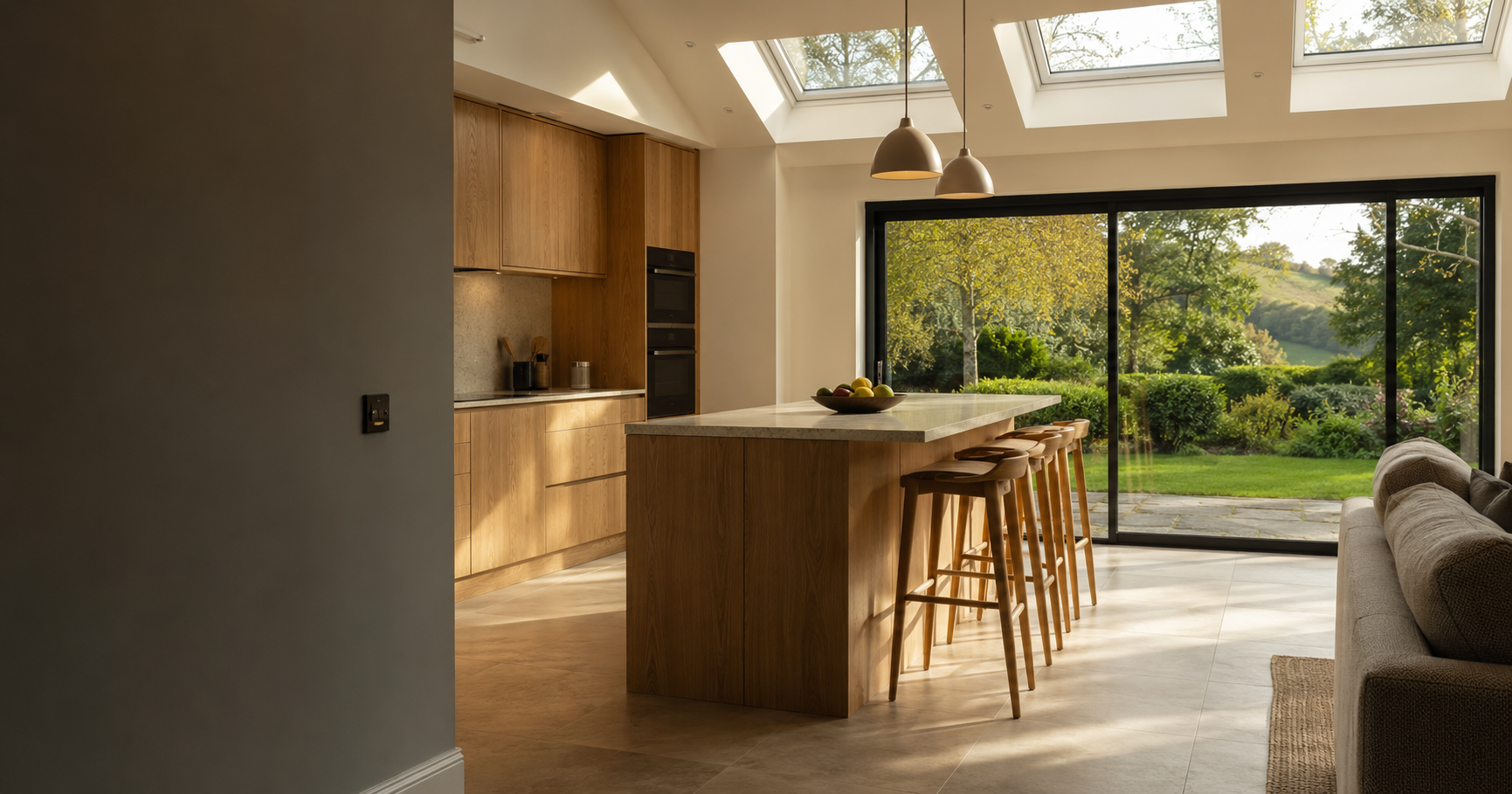
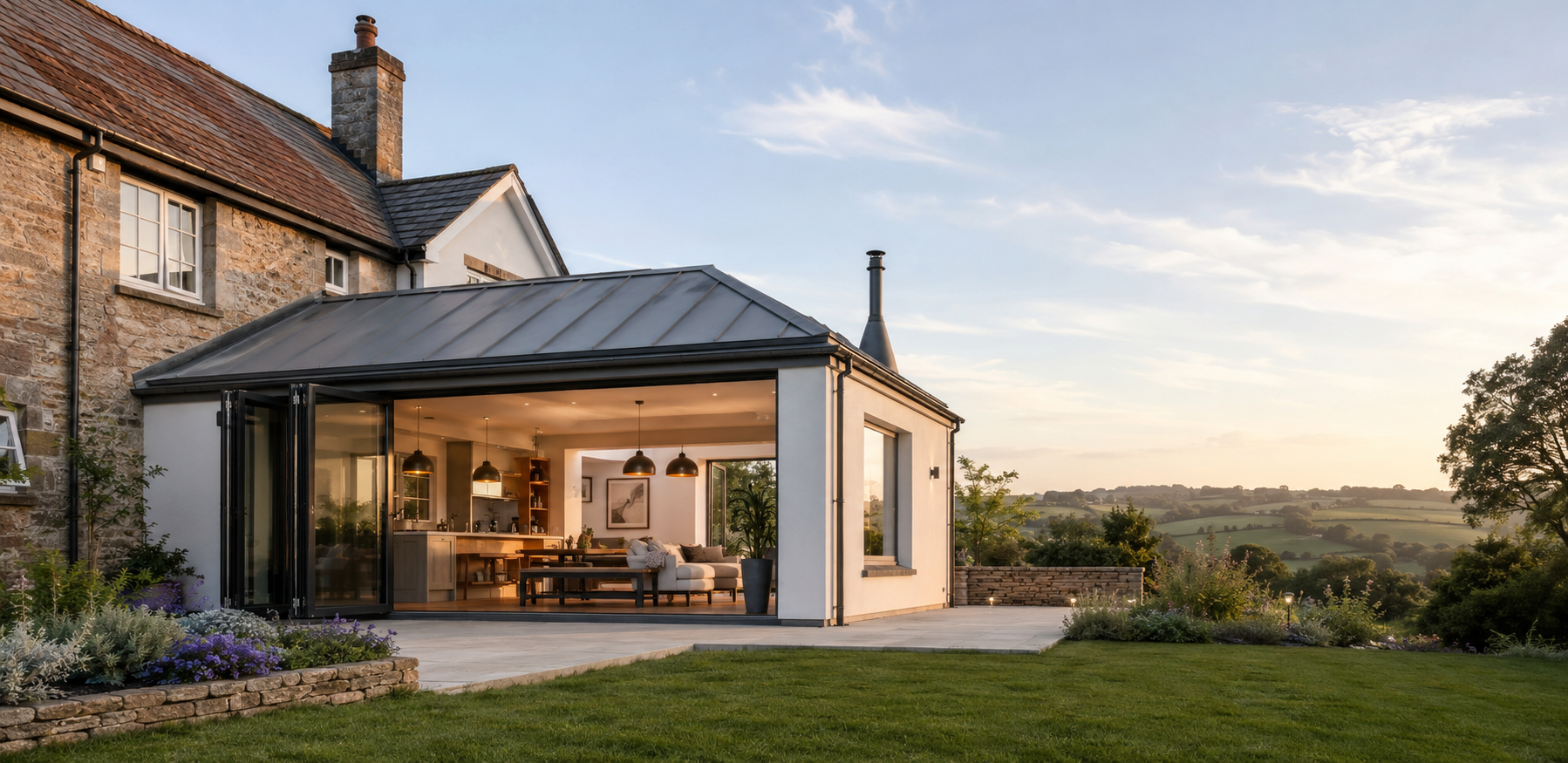
Big glazing is the whole point of a sea-facing extension, and it is also where overheating and glare come from. Roof-light placement, overhangs and solar-control glass do more for comfort than any amount of extra glass.
Recent work of this type
Questions we get asked
Do coastal extensions cost more?
Modestly, yes — mostly in fixings, finishes and glazing specification rather than labour.
Will bi-folds survive salt air?
With a marine-grade finish and regular rinsing of the tracks, yes. A standard finish on a direct seafront elevation will not last as well.
Can you build through winter on the coast?
Groundworks and internal fit-out, yes. We avoid opening a roof on an exposed plot in mid-winter where we have a choice.
Does the sea view affect planning?
Sometimes — coastal and AONB settings attract closer scrutiny of massing and materials. That is checked before we price.
Worth remembering
The design decides how a coastal extension looks on day one. The specification decides how it looks on year ten. Spend where the weather hits.